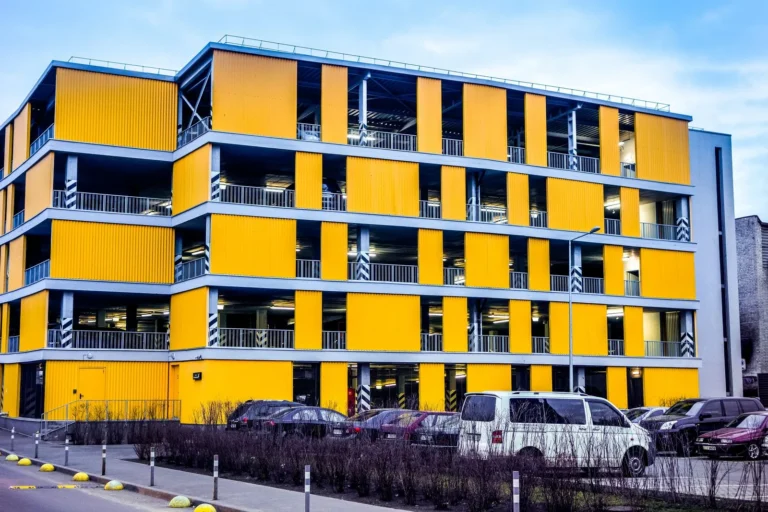
Every few months a story does the rounds on a Johannesburg community group. A car came back from OR Tambo with a window gone. Or a set of wheels. Or it didn’t come back at all. The story travels fast, gets a bit worse with each retelling, and by the time it reaches you the airport sounds like a place you park and pray. So let’s deal with the real question, without the drama.
Is it safe to park at OR Tambo? It’s as safe as the specific facility you choose, and the gap between facilities is wide. A monitored lot with controlled access and staff on duty is a different world to an open field with a boom gate and nobody watching. OR Tambo holds a dozen separate car parks, run by different people, to different standards, and every one of them calls itself secure.
What the actual risk looks like
Here’s the part the scary stories leave out. The incidents that happen around airport parking are mostly not armed hijackings in the middle of a guarded lot. Armed robbery of a parked car inside an access-controlled compound is rare, because it’s the hardest version of the crime to pull off. What actually happens is quieter and more opportunistic.
It’s the unlocked car with a laptop bag on the back seat. It’s the open lot with no lighting on the far row, where a set of headlights or a catalytic converter gets taken overnight. It’s the valet outfit that keeps a board of keys on a hook and can’t tell you who drove your car. None of that needs a gun. All of it needs the operator to be careless.
So when someone asks whether it’s safe, the honest answer is that the danger is mostly admin. Who has access. Who is watching. Where the keys live. Get those three right and the risk drops to something close to parking on a suburban street.
The three ways a car gets taken at an airport lot
If you want to judge a facility in two minutes, know what you’re judging it against.
- Opportunistic theft. Smash-and-grab for whatever’s visible, or parts stripped from a car left in a dark, unattended row. The fix is lighting, patrols and not leaving valuables in view.
- Key-based theft. The car goes because someone got the key. This happens when a valet or meet-and-greet service doesn’t control its key store, or hands a car to the wrong tag. The fix is a proper key board, disposal of nothing, and a signature at collection.
- Removal on a truck. The flatbed version. Rare, and it only works where a heavy vehicle can come and go without a record. The fix is a numbered gate and a log of every vehicle in and out.
Two of those three are decided before you ever get out of your car. You pick the lot. The lot decides the rest.
Self-park or hand over the keys?
Both are safe when the operator is competent, and both are risky when it isn’t. The difference is who carries the exposure.
With self-parking, you keep the keys. The car sits where you left it and doesn’t move. Some drivers sleep better that way, and if your car is a manual and a stranger’s clutch work worries you, it’s the obvious pick. The trade is that you carry the keys through your trip and you do the walking at both ends with your bags.
With a handover service, someone else parks and stores the car. Everything depends on how that operator runs its key control and its lot. Ask directly where your car will sit, whether it’s moved while you’re away, and who holds the keys. A good operator answers that without flinching. A bad one gets vague.
What a properly run lot does differently
Security at a parking facility comes down to a set of daily habits, and you can spot them in about two minutes.
- Access control on the gate. Tags, codes or a manned boom, with a record of who came in and when. A gate that opens for anyone is a decoration.
- Cameras that record. Not just cameras that exist. Ask whether footage is kept and for how long.
- Staff on site around the clock. Especially overnight, when the opportunistic stuff happens.
- A key store you can describe. Numbered tags, a controlled board, one person accountable.
- A collection procedure. You arrive, you give a reference, the car comes back with the odometer where you left it.
Red flags and green flags, side by side
| What you’re checking | Red flag | Green flag |
|---|---|---|
| The gate | Stands open, nobody logging vehicles | Controlled access with a record of entries |
| Lighting | Dark back rows, no lighting after sunset | Lit throughout, including the far bays |
| Cameras | Cameras that nobody can confirm record | Recording coverage with retention you can ask about |
| Keys | Keys on an open hook, no sign-out | Numbered key control with one accountable person |
| Insurance | Vague answer about cover while parked | Written terms you can read before booking |
ACSA’s lots versus the off-site operators
On the airport itself, the parking is run by Airports Company South Africa. Parkade 1 sits beside Terminal A, where the international departures are, and Parkade 2 links to Terminal B for domestic flights. The long-stay carports and open lots sit on the precinct and are reached by a shuttle or on foot. Security there is real, staffed and camera-covered, and you pay airport rates for it.
Off-site operators work the land south and west of the boundary, around Jones Road and the Kempton Park industrial belt. Because they sit outside the fence, their security is entirely their own. That’s the thing to interrogate. Some are excellent. Some are a patch of gravel with a hopeful signboard. The point of this guide is that you can tell them apart before you hand over the keys, not after.
What you should do before you leave the car
You control more of this than you think. The five-minute routine pays for itself.
- Walk the car with whoever takes it over and photograph every panel, plus the odometer and the fuel gauge.
- Take the valuables with you. Nothing on the seats, nothing in the boot that looks worth a brick through glass.
- Check that the immobiliser or tracker is armed, and that you know how to disable it when you come back.
- Keep your booking reference and the collection instructions somewhere you can reach them from the plane.
- Confirm the after-hours process. If your flight lands at 23:00, you want to know which gate is open and who’s on duty.
The risks that have nothing to do with theft
Thefts get the headlines. Missed flights and fried paint don’t, and they cost just as much. A Highveld hail storm between October and March can write off a year of careful driving in ten minutes, and an open bay gives your car no cover at all. A battery that was tired in July will be flatter than a pancake after three weeks of winter mornings.
Then there’s the shuttle. An off-site lot that runs one van on a loop means you leave 40 minutes of buffer for a 10-minute transfer. On a morning departure in December, with the R21 backed up from the Airport interchange, that buffer is the difference between a coffee at the gate and a rebooking desk. Ask how the shuttle runs at 04:00, before you need to know.
Coming in on the R21 and the R24
Most people parking at OR Tambo aren’t from Kempton Park. The airport sits roughly 23 km east of the Joburg CBD and about 50 km from Pretoria. The R21 brings in drivers from Pretoria, Centurion and the East Rand down past the Airport interchange. The R24 does the work from the west, off the N3 and the N12, past the Gillooly’s interchange and on towards the airport. Both clog at the same times: weekday mornings and the evening peak.
For a departure before 07:00, the drive in beats the drive home. The return leg is where good parking earns its keep. Your car is already at the airport and you’re not haggling an e-hailing fare through a surge at 23:00 with a tired kid and two suitcases.
Express Airport Parking runs long-stay and valet parking on the Kempton Park side of OR Tambo. Controlled-access gates, recorded camera coverage, staff on site and shuttles to Terminal A and Terminal B. If you want the lot that answers every question above with a yes, book your bay online and lock it in before the December rush. Day rates and cover options are on the rates page.
Frequently asked questions
Is it safe to leave my car at OR Tambo for two weeks?
Yes, if the facility is right. Duration isn’t the risk, the operator is. Choose a site with controlled access, recorded cameras and staff on duty, confirm what the terms say about cover while parked, and leave nothing valuable in the car.
Are cars stolen from OR Tambo parking?
Thefts do happen around airport parking, but the common incidents are opportunistic: valuables in view, parts taken from poorly lit open lots, and cars moving without proper key control. Pick a facility that fixes those three and the risk drops sharply.
Is it safer to self-park or use valet at the airport?
Both are safe with a competent operator. Self-parking keeps your keys with you. Valet means the operator stores the car and holds the keys, so their key control is what you’re trusting. Ask where the car sits and who has access.
Do the ACSA lots at OR Tambo have security?
Yes. The airport parkades and long-stay lots are staffed and covered by cameras. You pay airport rates for that. Off-site operators run their own security and it varies, which is why it’s worth checking before you book.
What if my flight lands after midnight?
Confirm the collection process before you travel. A good operator has someone on duty and a defined plan for late arrivals, with a gate and a procedure you can follow. Don’t assume it, ask.
Should I book airport parking in advance?
For the December and Easter peaks, yes, and two weeks ahead is sensible. Outside the peaks a few days works, but booking early still protects the covered bay you actually want.
On this page
- What the actual risk looks like
- The three ways a car gets taken at an airport lot
- Self-park or hand over the keys?
- What a properly run lot does differently
- Red flags and green flags, side by side
- ACSA’s lots versus the off-site operators
- What you should do before you leave the car
- The risks that have nothing to do with theft
- Coming in on the R21 and the R24
- Frequently asked questions